

The lollipop diet sounds almost too good to be true. Pop a piece of candy before a meal, curb your appetite, and watch the weight fall off. That pitch has circulated online for years, and it keeps finding new audiences because the idea of dieting with sweets is genuinely appealing. But what does the science actually say? This article cuts through the hype, explains exactly what the lollipop diet involves, and gives you the honest picture on whether lollipop weight loss is real or just clever marketing dressed up in a sugar coating.
Table of Contents
- Key takeaways
- What the lollipop diet actually is
- The science of appetite and what lollipops actually do
- Lollipop diet vs. real appetite control strategies
- When lollipops actually serve a medical purpose
- Practical guidance if you are curious about the lollipop diet
- My honest take on the lollipop diet trend
- How Looksmatter supports your real wellness goals
- FAQ
Key takeaways
| Point | Details |
|---|---|
| No defined protocol | The lollipop diet is an online trend, not a medically recognized diet with proven outcomes. |
| Low calories, high metabolic cost | Lollipops have under 60 calories but trigger blood sugar spikes that drive hunger back up. |
| Behavioral distraction only | Sucking a lollipop may help you get through a craving, but it does not suppress appetite physiologically. |
| Medical use is different | Lollipops have legitimate clinical uses in dysphagia therapy, which have nothing to do with weight loss. |
| Sustainable strategies win | Fiber, protein, meal timing, and behavioral tools outperform any candy diet plan for lasting results. |
What the lollipop diet actually is
The phrase “lollipop diet” does not refer to a structured, medically defined eating plan. It is mostly an online claim without a clinical protocol behind it. In practice, it typically means eating a lollipop before meals or during cravings with the goal of reducing how much you eat overall.
Here is what the typical lollipop diet approach looks like in practice:
- Eating one or two lollipops before meals to blunt appetite
- Using lollipops as a low-calorie substitute for higher-calorie snacks
- Choosing sugar-free or low-sugar varieties to minimize calorie intake
- Sometimes combining lollipops with meal skipping or calorie restriction
Some commercial products have leaned into this concept directly. Brands have marketed appetite-suppressant lollipops containing ingredients like Hoodia gordonii, a plant extract once promoted for hunger control. The marketing logic is simple: if a lollipop has fewer than 60 calories and keeps you from eating a 400-calorie snack, you come out ahead. That math is not wrong on paper. The problem is that the body does not run on paper math.
The historical parallel worth knowing here is the AYDS candy. In the 1970s and 1980s, AYDS was marketed as an appetite suppressant candy that promised rapid weight loss. It lacked solid clinical evidence, faced regulatory scrutiny, and eventually collapsed. Modern lollipop diet claims follow the same pattern: aggressive appeal, minimal science, and a reliance on the consumer’s hope that this time, the shortcut will work.
Pro Tip: If a product markets itself as a candy diet plan that suppresses appetite, look for peer-reviewed clinical trials before spending money on it. Marketing language and clinical evidence are two very different things.
The science of appetite and what lollipops actually do
Understanding why the lollipop diet falls short requires a quick look at how your body actually manages hunger. Appetite is not just a feeling in your stomach. It is a complex hormonal and neurological system involving at least two key hormones: ghrelin, which signals hunger, and leptin, which signals fullness. Neither of these responds meaningfully to a lollipop.

When you eat refined sugar, your blood glucose rises quickly. Your pancreas releases insulin to bring it back down. The problem is that this spike and crash cycle increases hunger soon after, often leaving you wanting more food than you would have eaten without the lollipop. You have not suppressed your appetite. You have temporarily distracted it and then amplified it.
There is also the nutritional gap to consider. Lollipops lack fiber, protein, and fat, the three macronutrients most responsible for sustained satiety. Fiber slows digestion and stabilizes blood sugar. Protein triggers the release of satiety hormones. Fat slows gastric emptying. A lollipop provides none of these effects. What it does provide is a brief oral sensation and a short-lived glucose hit.
Regular consumption adds another layer of concern. Repeated sugar intake from lollipops can increase systemic inflammation and disrupt gut microbiome diversity, both of which are connected to metabolic health and weight regulation. This is a long way from the “harmless low-calorie treat” framing that lollipop diet proponents use.
Pro Tip: Sugar cravings are best managed by eating balanced meals every 3 to 5 hours, not by reaching for a piece of candy. Stabilizing blood sugar in the first place is more effective than trying to manage the craving after it hits.
Lollipop diet vs. real appetite control strategies
So how does the lollipop diet actually stack up against approaches that have real evidence behind them? The comparison is not flattering for the candy.
| Strategy | Calorie impact | Effect on hunger hormones | Sustainability | Risk |
|---|---|---|---|---|
| Lollipop before meals | Saves 0 to 50 calories | Worsens insulin response | Low | Blood sugar instability |
| Fiber-rich snack (apple, nuts) | 100 to 150 calories | Supports leptin, reduces ghrelin | High | Minimal |
| Protein-based snack | 100 to 200 calories | Strong satiety hormone response | High | Minimal |
| Mindful eating practice | No calorie change | Improves hunger awareness | High | None |
| Meal timing structure | Depends on plan | Stabilizes ghrelin patterns | High | Minimal |
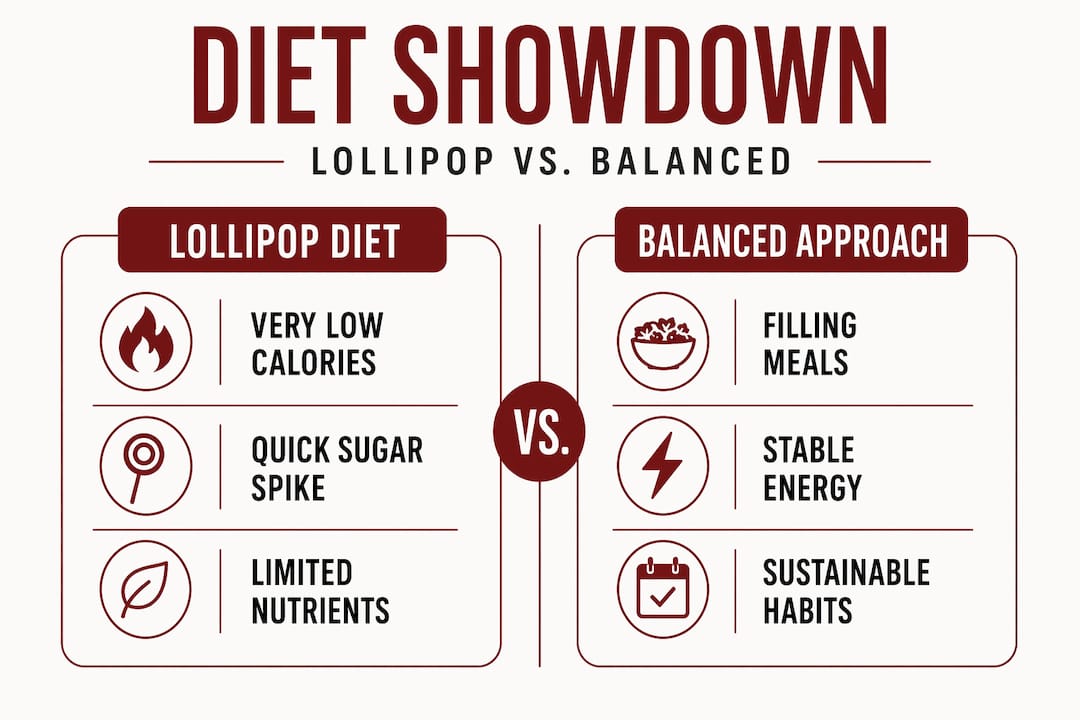
The table makes one thing clear: the lollipop diet’s only real advantage is its extremely low calorie count. But that advantage disappears once you account for the blood sugar rebound that follows. A small handful of almonds has more calories than a lollipop and yet does a dramatically better job of keeping you satisfied for the next two hours.
Expert opinion on quick weight loss methods consistently points away from sugar-based appetite hacks. The behavioral effect of sucking a lollipop can help some people get through a craving moment, but this is distraction, not physiological hunger control. That distinction matters because distraction strategies do not scale. They work once, maybe twice, and then the body adapts and the craving wins.
If you are genuinely exploring healthy dessert options that satisfy a sweet tooth without derailing your goals, the better path involves foods like fresh fruit, Greek yogurt with a drizzle of honey, or dark chocolate with at least 70% cacao. These options deliver sweetness alongside nutrients that actually support your body’s satiety signals. You can also look at low-bloat food swaps that help you manage cravings without the metabolic downsides.
When lollipops actually serve a medical purpose
There is one context where lollipops genuinely help people: clinical dysphagia therapy. Dysphagia is a swallowing disorder that affects many people, particularly older adults and those recovering from strokes or neurological conditions.
- A patient with dysphagia is given a lollipop as part of a structured oral rehabilitation program under medical supervision.
- The patient performs controlled sucking exercises over a set period, often months, to rebuild tongue strength and oral muscle coordination.
- A published case study showed improved tongue movement and oral function after consistent lollipop-based therapy in a patient with moderate dementia.
- The timing, duration, and frequency of each session are carefully controlled by a speech-language pathologist.
- The goal is swallowing rehabilitation, not calorie restriction or weight loss.
This clinical use is worth understanding because it occasionally gets cited in discussions about lollipop benefits, creating a misleading impression. Oral rehabilitation with lollipops involves prolonged, timed sucking under medical oversight. It has nothing to do with eating candy before meals to lose weight. The two uses share an object but not a purpose, a context, or a mechanism.
Practical guidance if you are curious about the lollipop diet
If you found this article because you were genuinely wondering whether you could lose weight eating lollipops, here is the honest answer: probably not in any meaningful or lasting way. The behavioral distraction effect is real but limited. The metabolic downsides are real and significant. And there are far better tools available to you.
Here is what actually works for appetite control and sustainable weight loss:
- Eat protein at every meal. Protein is the single most satiating macronutrient. Even adding eggs to breakfast or Greek yogurt to a snack makes a measurable difference in how hungry you feel two hours later.
- Prioritize fiber. Vegetables, legumes, and whole grains slow digestion and feed the gut bacteria that support metabolic health. They do the opposite of what refined sugar does.
- Structure your eating windows. Eating every 3 to 5 hours prevents the blood sugar crashes that trigger intense cravings. This is the environment in which a lollipop craving would not even arise.
- Address the emotional layer. Many cravings are not about hunger. Stress, boredom, and habit drive a significant portion of snacking behavior. Identifying your personal triggers is more effective than any food hack.
- Consider sugar-free alternatives carefully. Sugar-free lollipops reduce the calorie and blood sugar concern but may still reinforce sweet-seeking behavior. They are a better choice than regular lollipops but not a weight loss strategy on their own.
Pro Tip: Before reaching for any low-calorie treat, drink a full glass of water and wait 10 minutes. Thirst is frequently misread as hunger, and this one habit eliminates a surprising number of unnecessary snack moments.
If your weight management challenges feel persistent or overwhelming, working with a registered dietitian is worth far more than any candy diet plan. Professional guidance is personalized, evidence-based, and addresses the full picture of your health.
My honest take on the lollipop diet trend
I have watched a lot of quick weight loss methods cycle through the wellness space, and the lollipop diet fits a very familiar pattern. It takes something genuinely low in calories, attaches a weight loss narrative to it, and spreads because people want the idea to be true. I get it. The appeal of dieting with sweets is real. Nobody wants to give up everything enjoyable to lose weight.
But what I have learned from watching these trends closely is that the focus on low calories alone ignores the hormonal and metabolic drivers of hunger. Calories are not the whole story. A 50-calorie lollipop that spikes your insulin and sends you to the kitchen an hour later is not a weight loss tool. It is a setup.
The people I have seen actually succeed at managing their weight long-term share one thing: they stopped looking for hacks and started building systems. Consistent meal timing, real food that satisfies hunger, and honest attention to emotional eating patterns. None of that is as exciting as a candy diet plan, but all of it actually works. My advice is to take the curiosity that brought you to the lollipop diet and redirect it toward understanding your own hunger signals. That is where the real leverage is.
— Looks
How Looksmatter supports your real wellness goals
If the lollipop diet brought you here, chances are you are looking for something that actually delivers visible results without the guesswork. That is exactly where Looksmatter comes in.

Looksmatter’s SCULPT Debloating Powder is built on a plant-powered formula using fruits and herbs chosen specifically for their digestive benefits. It supports smoother digestion, reduces facial puffiness, and helps you look and feel more defined. No blood sugar spikes. No metabolic compromises. Just real ingredients with a clear purpose. If you have been dealing with bloating that makes your results feel invisible despite your efforts, this is worth a look. Looksmatter backs every purchase with a 30-day return policy, so the risk is minimal. Check out the SCULPT Debloating Powder and see what plant-powered support actually feels like. You can also read more about debloating your face for tips on getting a more defined look starting today.
FAQ
What is the lollipop diet?
The lollipop diet is an online weight loss trend, not a medically defined protocol. It typically involves eating lollipops before meals or during cravings as a low-calorie appetite hack.
Can you lose weight eating lollipops?
Lollipops have under 60 calories, but they trigger blood sugar spikes that increase hunger shortly after. Any short-term calorie savings are typically offset by increased appetite and cravings.
Are sugar-free lollipops better for weight loss?
Sugar-free lollipops avoid the blood sugar spike of regular candy and reduce calorie intake, but they still reinforce sweet-seeking behavior and do not provide the fiber or protein needed for real satiety.
Why are lollipops used in medical settings?
Lollipops are used in dysphagia therapy to rehabilitate oral muscles and improve swallowing function. This is a supervised clinical practice with no connection to weight loss claims.
What works better than the lollipop diet for appetite control?
Protein-rich snacks, fiber-dense foods, structured meal timing, and behavioral strategies like identifying emotional eating triggers all outperform lollipop-based appetite suppression with actual evidence behind them.