

You board a 6 a.m. flight, skip breakfast, grab a bag of pretzels at the gate, and wash it down with a Diet Coke. By the time you land, your pants feel two sizes too small and your focus is shot before the first meeting even starts. If you regularly need to reduce bloating work travel brings on, you are not alone. Business trips stack nearly every digestive trigger imaginable into a single day: rushed eating, dehydration, inactivity, stress, and unfamiliar food. This guide breaks down exactly why it happens and what you can do about it, before, during, and after your trip.
Table of Contents
- Key takeaways
- Why you bloat so badly on work trips
- Your pre-trip preparation checklist
- Step-by-step strategies for the travel day itself
- Common mistakes that make travel bloating worse
- What to expect and how to track your progress
- My honest take on managing bloating while traveling
- A travel-ready solution worth knowing about
- FAQ
Key takeaways
| Point | Details |
|---|---|
| Identify your triggers | Eating speed, carbonated drinks, and stress are the top bloating culprits during work travel. |
| Prepare before you fly | Pack smart snacks, probiotics, and herbal teas to stay ahead of digestive disruption. |
| Move and hydrate consistently | Short walks after meals and steady water intake prevent the two biggest travel bloating drivers. |
| Track food and symptoms | A simple travel log connects your habits to flare-ups so you can adjust on future trips. |
| Know when to get help | Persistent or painful bloating that does not respond to lifestyle changes warrants medical advice. |
Why you bloat so badly on work trips
Most frequent travelers assume bloating is just part of the deal. It is not inevitable, but it is predictable once you understand what is actually triggering it.
The biggest culprit most people overlook is aerophagia, which is simply swallowing excess air. Eating quickly, chewing gum, drinking through straws, and sucking on hard candy all pump air directly into your digestive tract. Business travel is full of these habits. You chew gum to stay alert on the flight. You drink sparkling water at the client dinner. You inhale a sandwich between meetings. Every one of those behaviors adds gas to your gut.
Diet plays an equally significant role. Airport food is notoriously high in sodium, which causes your body to retain water and feel puffy. Carbonated beverages introduce gas directly. Unfamiliar restaurant meals often contain ingredients your gut is not used to processing, and that novelty alone can slow digestion.
Here is what else compounds the problem on a typical work trip:
- Dehydration: Cabin air on flights has extremely low humidity, and most travelers do not compensate with enough water. Dehydration draws water from stool, which hardens it and leads to constipation-driven bloating that can feel identical to water retention.
- Inactivity: Long flights and back-to-back meetings mean you sit for hours. Movement is what keeps your digestive system moving. Without it, gas gets trapped and stool slows.
- Stress: The gut-brain connection is real. Travel anxiety, presentation nerves, and disrupted sleep all signal your gut to slow down or become hypersensitive, amplifying every other trigger on this list.
- Routine disruption: Your body thrives on schedule. Eating at odd hours, skipping meals, and crossing time zones all throw off the hormonal rhythms that regulate digestion.
No single fix addresses all of these because the root causes differ. Gas from aerophagia needs a behavioral fix. Constipation needs fluids and movement. Stress-driven bloating needs a different approach entirely. Knowing which type you are dealing with is the first step toward actually solving it.
Your pre-trip preparation checklist
The travelers who manage bloating best on the road do most of their work before they leave home. Reactive fixes at 35,000 feet are far less effective than smart preparation.
| Preparation area | What to do | Why it helps |
|---|---|---|
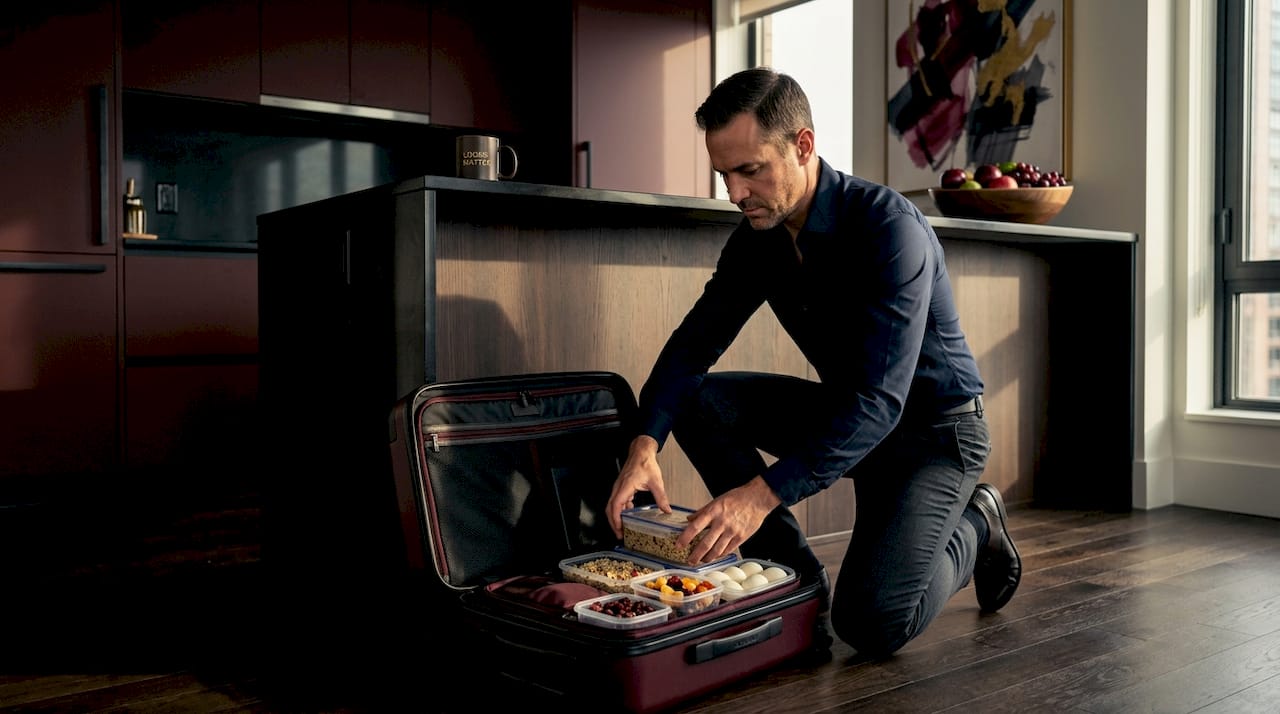
| Snacks | Pack nuts, rice cakes, boiled eggs, or low-sugar protein bars | Avoids high-sodium, high-sugar airport food that triggers bloating |
| Supplements | Bring a probiotic, magnesium, and peppermint capsules | Probiotics and magnesium support regularity and reduce gas |
| Drinks | Pack herbal tea bags (ginger, fennel, or peppermint) | Soothes the gut and replaces carbonated beverages |
| Clothing | Wear or pack compression socks | Reduces fluid pooling in legs that worsens overall puffiness |
| Tracking | Start a food and symptom log the day before departure | Establishes a baseline to identify what triggers your personal flare-ups |
Meal timing matters just as much as what you eat. Eating a balanced, fiber-rich meal at home before you leave is far better than gambling on whatever is available at the terminal. If you are flying early, a light meal beats no meal. Skipping food entirely then overeating when you finally land is one of the most reliable ways to end up bloated by evening.
Pro Tip: If you have a sensitive gut, start reducing high-FODMAP foods like garlic, onions, beans, and wheat two days before a major trip. This gives your digestive system a cleaner baseline to work from when travel stress hits.
For travelers managing IBS, aligning travel eating with low-FODMAP choices and sticking to consistent meal times reduces guesswork and prevents the flare-ups that derail full workdays. Knowing your safe foods before you travel is not overly cautious. It is just smart planning.
Step-by-step strategies for the travel day itself
These are the specific behaviors that make the difference between landing fresh and landing bloated. Apply them in order throughout your travel day.
-
Start hydrated before you board. Drink 16 ounces of water before you reach the gate. Cabin humidity drops to around 10 to 20 percent on most commercial flights, and you will be fighting dehydration from the moment you sit down. Starting ahead means you are not playing catch-up.
-
Swap carbonated drinks for still water or herbal tea. This single change removes one of the most direct sources of travel bloat. Skipping carbonation and very salty foods while keeping fluids steady is one of the most consistently recommended bloating relief tips for travel.
-
Eat slowly and without distraction. Put your phone down during meals. Chew thoroughly. Mindful eating prevents the delayed fullness that leads to overeating, which is one of the most common ways to ease bloating on work days.
-
Walk for 10 to 15 minutes after every meal. On a flight, this means standing and moving in the aisle or doing seated stretches. At the airport, walk to your gate instead of taking the moving walkway. A short walk after meals helps gas move through your system rather than sitting and building pressure.
-
Avoid gum, straws, and hard candy entirely. These behaviors cause aerophagia linked to distracted eating and are among the easiest triggers to eliminate with zero downside.
-
Choose low-FODMAP foods when ordering at restaurants. Grilled proteins, rice, cooked vegetables, and plain salads are widely available and gentle on digestion. The low-FODMAP approach helps IBS travelers by removing fermentable carbohydrates that feed gas-producing bacteria.
-
Use OTC options strategically. Simethicone breaks up gas bubbles and works well for acute discomfort. It does not address root causes, but it can provide real relief when you need to be sharp in a meeting. Use it as a bridge, not a solution.
Pro Tip: Electrolyte packets are one of the most underused tools for how to reduce bloating on flights. They help you absorb water more efficiently than plain water alone, which reduces both dehydration and the fluid retention that makes you feel puffy after landing.
Common mistakes that make travel bloating worse
Even experienced travelers make these errors. Knowing them in advance saves you a lot of discomfort.
- Ignoring the urge to use the restroom. Bowel movements often occur in the morning, and suppressing the urge because you are rushing through an airport is a fast track to constipation. Use the restroom when your body signals you, even if it is inconvenient.
- Overcorrecting with fiber. Adding a lot of fiber suddenly when you are already bloated can make things significantly worse. Fiber helps when combined with adequate hydration, but a sudden spike in fiber intake without enough water creates more gas, not less.
- Dropping fiber too low on a restricted diet. Travelers managing IBS with a low-FODMAP approach face the opposite risk. A low-FODMAP diet risks low fiber intake, which can shift the problem from gas-related bloating to constipation-related bloating. Plan your fiber sources deliberately.
- Relying on alcohol to unwind. Alcohol disrupts sleep, dehydrates you, and irritates the gut lining. The glass of wine at the hotel bar feels like stress relief but compounds every digestive problem you are already managing.
- Skipping sleep. Poor sleep directly worsens gut sensitivity. If you are traveling across time zones, prioritize sleep quality over late-night work sessions whenever possible.
When bloating is severe, persistent, or accompanied by pain, blood in stool, or significant weight changes, treat those as red flags that require medical evaluation rather than more self-management.
What to expect and how to track your progress
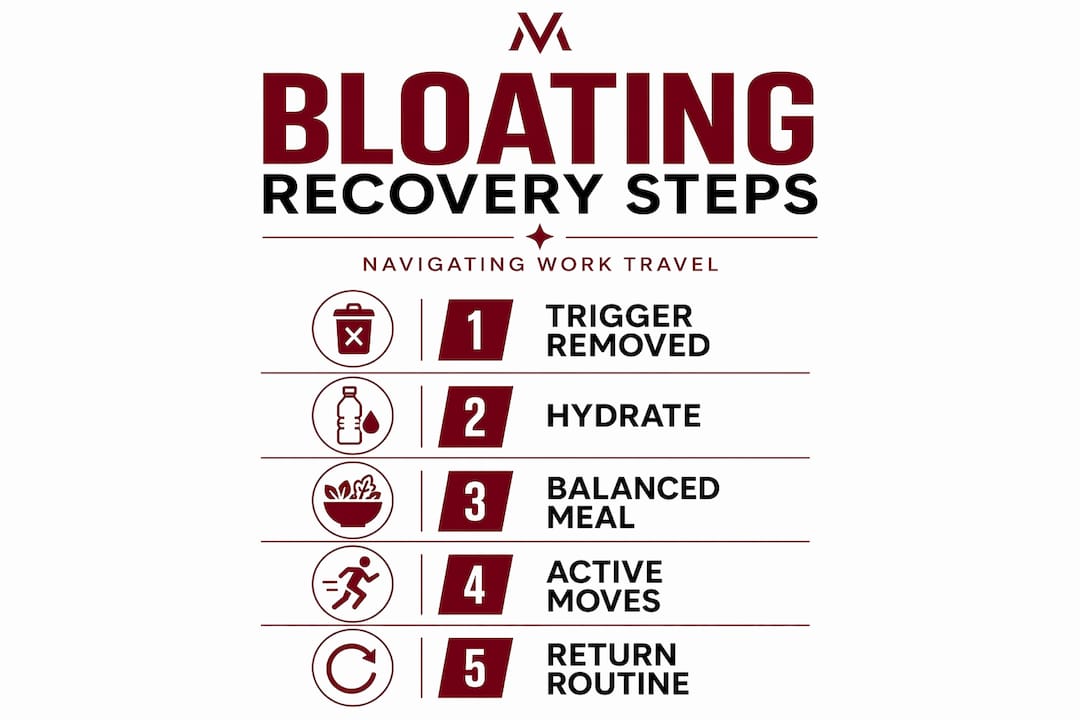
Travel bloating is not a permanent condition. For most people, it resolves within 24 to 48 hours of returning to normal routines, regular meals, and adequate sleep. The first intervention for constipation-driven bloating is restoring fluids and movement, and most travelers see improvement within a day when they do both consistently.
| Scenario | Expected recovery time | Key action |
|---|---|---|
| Gas from diet or aerophagia | 4 to 12 hours | Eliminate trigger behaviors and walk after meals |
| Constipation-related bloating | 24 to 48 hours | Increase fluids, add gentle movement, consider magnesium |
| Stress-driven gut sensitivity | 1 to 3 days after trip ends | Sleep, routine meals, and reduced stimulants |
| IBS flare-up from travel | 2 to 5 days | Return to low-FODMAP baseline and consult your dietitian |
The most valuable long-term tool is a simple travel log. Note what you ate, how much you drank, your activity level, stress rating, and how your gut felt each day. After three or four trips, patterns emerge that no general guide can predict for you. Your personal triggers become obvious, and you stop guessing.
Rebuilding your home routine quickly after returning matters more than most travelers realize. Sleeping in your own bed, eating your regular meals, and resuming your normal movement schedule resets your digestive rhythm faster than any supplement alone.
My honest take on managing bloating while traveling
I have seen a lot of advice on this topic that treats bloating as a simple problem with a simple fix. It is not. What I have found, both from experience and from watching how frequent travelers actually behave, is that the people who manage it best are the ones who stop treating it as an emergency to react to and start treating it as a system to manage.
The mindset shift that makes the biggest difference is this: your digestive system does not care that you have a 7 a.m. flight and a client dinner at 7 p.m. It runs on rhythm, hydration, and movement. When you take that away, it pushes back. The travelers who show up to meetings looking and feeling sharp are the ones who have built small, non-negotiable habits around water intake, meal pacing, and post-meal movement. They are not doing anything extreme. They are just consistent.
What I have also learned is that preparation beats willpower every single time. Deciding to eat well at an airport when you are tired, stressed, and running late is a losing battle. Packing your own snacks, having your herbal tea bags in your carry-on, and knowing your safe restaurant orders in advance removes the decision entirely. You can find more on building a debloat routine that works even on the road, and it is worth doing before your next trip.
The body tells you what it needs. The skill is learning to listen before it gets loud.
— Looks
A travel-ready solution worth knowing about
If you have dialed in your habits and still find bloating catching up with you on longer trips, adding a targeted supplement can close the gap.

Looksmatter’s SCULPT Debloating Powder is built specifically for people who want a plant-powered, convenient option they can take anywhere. The formula uses fruits and herbs chosen for their digestive benefits, supporting smoother digestion and reducing the puffiness that makes you feel off in client-facing situations. It mixes easily into water, which means it fits into a travel routine without adding complexity. For frequent travelers who want to look and feel their best from the moment they land, it is a practical addition to the strategies covered in this guide. Looksmatter backs it with a 30-day return policy, so there is no risk in trying it. Shop the debloating powder and see how it fits into your travel routine.
FAQ
What causes bloating specifically during work travel?
Work travel stacks multiple digestive triggers at once, including rushed eating, carbonated drinks, dehydration from cabin air, prolonged sitting, and stress. Each of these contributes to gas buildup or constipation, which are the two main forms of travel bloating.
How do I reduce bloating on a long flight?
Drink steady amounts of still water, avoid gum and straws, choose low-sodium snacks, and walk the aisle or do seated stretches every hour. These traveling with bloating solutions address both gas and fluid retention simultaneously.
How long does travel bloating usually last?
For most travelers, gas-related bloating clears within 4 to 12 hours of removing the trigger. Constipation-driven bloating typically resolves within 24 to 48 hours once you restore normal fluid intake and movement.
Are there best foods to prevent bloating during travel?
Yes. Grilled proteins, rice, cooked vegetables, and low-sugar snacks like nuts or boiled eggs are among the best foods to prevent bloating on travel days. Avoid beans, cruciferous vegetables, high-sodium processed foods, and carbonated beverages.
When should I see a doctor about travel bloating?
See a doctor if bloating is severe, persistent beyond a week, or accompanied by pain, blood in stool, or unexplained weight loss. These symptoms go beyond typical travel-related digestive disruption and need professional assessment.