

Most people burning through roughly $175 per year on supplements have no clear sense of whether any of it is working. The supplement aisle is loud, confusing, and full of labels designed to sell you on feelings rather than facts. This affordable natural supplements guide cuts through the noise. You’ll learn exactly which supplements are worth your money, how to spot quality products on a budget, and how to use them in a way that actually moves the needle on your health.
Table of Contents
- Key takeaways
- Your affordable natural supplements guide starts here
- How to find quality supplements without overspending
- Best low-cost supplements for common health goals
- Integrating supplements safely into your routine
- Avoiding the most common supplement mistakes
- My take on spending smart in this space
- Start building your supplement routine today
- FAQ
Key takeaways
| Point | Details |
|---|---|
| Spending doesn’t equal results | Americans spend $60 billion annually on supplements, often with little evidence supporting the products they buy. |
| Certifications are your filter | Third-party labels like NSF, USP, and Informed Sport verify what is actually in the bottle. |
| Form matters enormously | Magnesium glycinate absorbs at 80% versus 4% for magnesium oxide, making form selection a real money decision. |
| A core stack costs under $70 | Creatine, vitamin D3+K2, magnesium glycinate, and fish oil cover foundational needs for around $60 to $70 monthly. |
| Food comes first | Supplements fill specific gaps. They work alongside a solid diet, not instead of one. |
Your affordable natural supplements guide starts here
Before you spend another dollar, you need a framework. The supplement world splits into four main categories: vitamins, minerals, herbs, and botanicals. Vitamins and minerals are nutrients your body needs to function. Herbs and botanicals come from plants and are used to support specific functions like stress response, digestion, or immunity.
The confusion usually starts here. People treat all four the same way, but they work through different mechanisms and have wildly different levels of research behind them. Vitamin D3 deficiency is well documented and supplementation has solid clinical backing. A “detox blend” from a new brand? Far less clear.
The real skill is separating genuine health needs from marketing hype. Ask yourself: Do I have a known deficiency or specific symptom? Is there peer-reviewed research, not just testimonials, supporting this supplement? Is the dose in this product actually the dose used in studies?
Common supplement types and their primary, research-supported uses include:
- Magnesium: Sleep quality, muscle recovery, nervous system regulation
- Vitamin D3: Bone health, immune support, mood regulation
- Omega-3 fatty acids: Cardiovascular health, inflammation reduction
- Creatine: Muscle strength, cognitive performance
- Ashwagandha: Stress and cortisol management
- Berberine: Blood sugar regulation, metabolic support
Pro Tip: Before buying any supplement, search the ingredient plus “clinical trial” or “systematic review” on PubMed. If solid human studies don’t show up, your money is likely better spent elsewhere.
How to find quality supplements without overspending
Price and quality have almost no relationship in the supplement industry. A $40 product can be junk. A $12 product can be excellent. What separates them is not the marketing budget but the manufacturing standards.
Third-party certifications from organizations like NSF International, USP, and Informed Sport are your most reliable quality indicators. These groups test independently to confirm that what is on the label is actually in the bottle, at the stated dose, without unsafe contaminants. Many budget-friendly supplements carry these seals. Many expensive ones do not.
Proprietary blends are a common trap. When a label says “Proprietary Blend 800mg” and lists six ingredients beneath it, you have no idea if any single ingredient reaches an effective dose. Avoid them entirely.
Here is what to check on any label before purchasing:
- Elemental amount vs. compound weight: Calcium carbonate is not the same as elemental calcium. Look for the actual elemental amount.
- Standardized extract percentage: For herbs, this tells you the concentration of active compounds. Look for brands listing these specifics.
- Clinically studied forms: Branded ashwagandha extracts like KSM-66 provide standardized withanolides. Generic root powder often does not.
- No unnecessary fillers: Magnesium stearate and silicon dioxide in small amounts are fine. Long lists of artificial colors or sweeteners are not.
Storing your supplements correctly extends their life and protects your investment. Bathroom moisture exposure degrades many supplements quickly. Keep them in a cool, dry, dark cabinet instead, and you will maintain potency far longer.
Pro Tip: Buy from brands that publish their Certificates of Analysis (COA) online. A COA is the actual lab test result confirming purity and potency. Brands confident in their products make these easy to find.
Best low-cost supplements for common health goals
Here is where the affordable natural supplements guide gets practical. These are the best low-cost supplements with the strongest evidence base, organized by what they do for you.
The core four foundational supplements
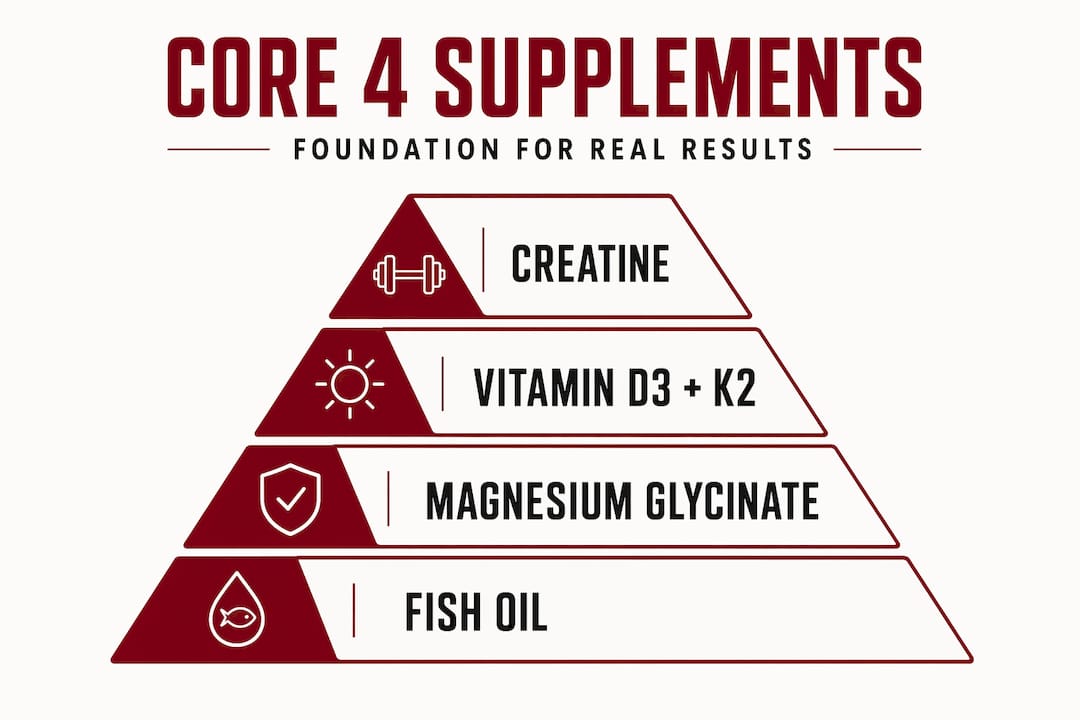
A foundational supplement stack built around creatine, vitamin D3+K2, magnesium glycinate, and fish oil runs roughly $60 to $70 per month. That covers muscle performance, bone health, sleep, mood, and cardiovascular support in one clean sweep.
Half of U.S. adults do not get enough magnesium through diet alone. Most people also go through entire winters with insufficient vitamin D. These are real, measurable gaps. Filling them with inexpensive, well-studied supplements is one of the highest-return health decisions you can make.

Form selection matters more than brand prestige. Magnesium glycinate absorbs at around 80% compared to roughly 4% for the cheaper and far more common magnesium oxide. Spending slightly more for glycinate saves you money long-term because you actually absorb what you pay for.
Affordable herbal products with real evidence
| Supplement | Primary benefit | Approximate monthly cost | Quality form to look for |
|---|---|---|---|
| Ashwagandha | Stress, cortisol, sleep | $10 to $20 | KSM-66 or Sensoril extract |
| Berberine | Blood sugar, metabolism | $15 to $25 | 500mg doses, 3x daily |
| Fish oil (omega-3) | Inflammation, heart health | $15 to $25 | 1g EPA+DHA minimum daily |
| Creatine monohydrate | Strength, cognition | $10 to $20 | Pure monohydrate, no blends |
| Vitamin D3+K2 | Bone, immune, mood | $10 to $15 | D3 paired with MK-7 form of K2 |
On the natural supplements versus pharmaceuticals question, particularly for weight management: berberine supports metabolic health but produces meaningfully less dramatic results than GLP-1 medications, which show 15 to 20% body weight reduction. Berberine is not a replacement for a GLP-1 drug. It is a useful, low-cost metabolic support tool for people who are not candidates for pharmaceuticals or prefer a natural approach. Setting realistic expectations here matters.
The food-first approach remains the most cost-effective strategy. Whole grains, lean protein, fruits, and vegetables provide compounds that supplements simply cannot replicate in isolation. Think of supplements as filling in what your diet consistently misses, not as a replacement for eating well.
Integrating supplements safely into your routine
Buying the right supplements is half the work. Using them correctly determines whether you see results. Most people make two mistakes: starting too many at once, and taking things at random times without considering absorption.
Start with one or two supplements and give each at least four to six weeks to show effects. Adding five new supplements simultaneously makes it impossible to know what is working and exposes you to unexpected interactions.
Here is a practical sequence for integrating a core supplement routine:
- Identify your priority need. Choose one clear goal: better sleep, more energy, less stress. Pick the supplement most directly supported by evidence for that goal.
- Check for interactions. Run your planned stack through a free tool like Examine.com or discuss it with a pharmacist. Fish oil and high-dose vitamin E together, for example, can increase bleeding risk.
- Time your doses strategically. Take magnesium glycinate 30 to 60 minutes before bed for its calming effect. Take vitamin D3 with your largest meal, as it absorbs with dietary fat. Take creatine consistently at any time, with water.
- Track your baseline and your results. Write down your energy, sleep quality, or other target symptoms before starting. Reassess after six weeks using the same criteria.
- Adjust or drop what isn’t moving the needle. Not every supplement works equally for every person. If nothing changes after two honest months, discontinue and redirect that budget.
Pro Tip: Timing and dosage integration enhances benefits and reduces waste. Taking fat-soluble supplements like vitamin D and K2 with food is not optional. It is the difference between absorbing your dose and passing it through unused.
When to talk to a doctor: if you are on any prescription medication, pregnant, managing a chronic condition, or giving supplements to a child, get professional input first. Some herbal products interact with common medications in ways that genuinely matter.
Avoiding the most common supplement mistakes
Even people with the right intentions lose money on supplements they do not need or products that do not deliver. Recognizing these patterns saves you real cash.
The biggest misconception is that price signals quality. It does not. The supplement industry lacks FDA pre-market review, meaning a company can release a product with no independent verification of its claims. An expensive supplement with dramatic packaging can contain the same underdosed ingredient as a $10 generic. Without third-party certification, price tells you nothing about what is inside.
Other mistakes worth watching for:
- Buying for the ingredient, ignoring the form. Buying “magnesium” without specifying glycinate or malate often means you are buying oxide, which is largely ineffective.
- Trusting influencer endorsements over research. Paid endorsements are not evidence. Check the research directly.
- Assuming natural means harmless. Natural does not mean safe. Kava can stress the liver. High-dose vitamin A is toxic over time. Dose and context always matter.
- Stacking too many adaptogens. Combining five different stress-response herbs does not multiply the benefit. It creates complexity with no additional gain.
If a supplement has caused any unusual symptoms, stop taking it. Side effects are information, not something to push through.
My take on spending smart in this space
I’ve watched people throw serious money at supplements while ignoring the variables that actually matter, and I’ve done it too. The industry is excellent at making you feel like the next product will be the one that finally works.
What I’ve found is that most people need four things: a solid vitamin D level, sufficient magnesium, good omega-3 status, and creatine if they’re doing any resistance training. Everything else is an optional upgrade depending on specific needs. That entire stack costs less than a single “premium wellness bundle” from most direct-to-consumer brands.
My stronger opinion: the obsession with natural supplement recommendations from influencers has created a generation of over-supplemented people who eat poorly. The people I see getting the most from their supplement routine are the ones who already eat reasonably well and use supplements to fill documented gaps, not correct a bad diet.
The third-party certification point is non-negotiable in my view. I will not buy a supplement that does not carry NSF, USP, or Informed Sport verification. Ever. The cost difference between certified and uncertified products is usually small. The quality difference can be enormous.
— Looks
Start building your supplement routine today
If you’ve been struggling with bloating, puffiness, or that feeling of never quite looking or feeling your best, the gap is sometimes not about the big supplements at all. It’s about digestion. It’s about what your body is holding onto.

Looksmatter’s SCULPT Debloating Powder is built around a plant-powered formula using fruits and herbs selected for their digestive benefits. It works to reduce facial puffiness, support clearer skin, and smooth out digestion, all while fitting neatly into a budget-conscious wellness routine. The 30-day satisfaction guarantee means you can try it without risk. Check out the SCULPT Debloating Powder and see what targeted, plant-based support actually feels like. You can also explore more of Looksmatter’s approach to natural wellness. For more on managing puffiness through diet and supplementation, the guide on reducing facial bloating is worth reading alongside this article.
FAQ
What are the best budget-friendly supplements to start with?
Vitamin D3, magnesium glycinate, and omega-3 fish oil form a solid, research-backed foundation. Together, they cover immunity, sleep, and cardiovascular health for well under $50 per month.
How do I know if a natural supplement is high quality?
Look for third-party certifications from NSF, USP, or Informed Sport on the label. These verify that the product contains what it claims, at the stated dose, without harmful contaminants.
Is natural always safer than synthetic?
No. The FDA does not review supplements before they reach market, and natural ingredients can cause real harm at wrong doses or in combination with medications. Always check research and consult a professional when needed.
How long should I take a supplement before judging results?
Most supplements need four to six consistent weeks before measurable effects appear. Track your baseline symptoms before starting and reassess with the same criteria at the six-week mark.
Where is the best place to buy natural supplements on a budget?
Reputable retailers like Amazon, Costco, iHerb, and Thorne’s direct site offer certified products at competitive prices. Prioritize brands with published Certificates of Analysis over flashy packaging or aggressive marketing claims.